Overview
A practice-based conceptual framework emerging from doctoral research in algorithmic governance. Three original contributions — AI as Disclosive Horizon, the AI-Assisted Triple Hermeneutic, and the Hermeneutic Algorithm Audit — presented as a nested ontological orientation to generative AI within hermeneutic phenomenology research practice.
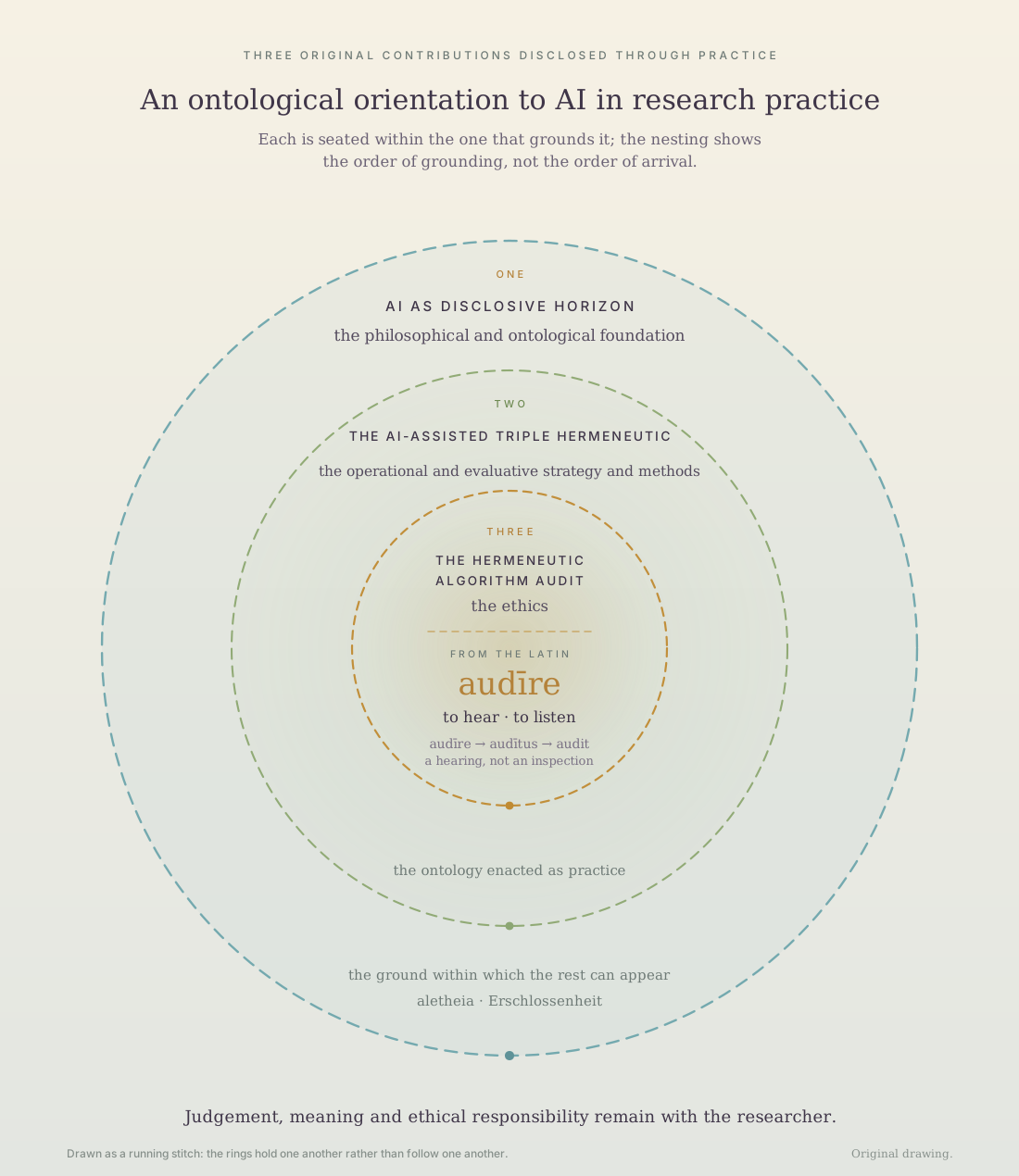
Click to enlarge
Figure 1. An ontological orientation to AI in research practice.
Original concepts: Pay (2025). Visual: Claude Opus 5 High (Anthropic), August 2026, to the author's specification and revisions.
Video presentation
coming soon
A presentation introducing the three concepts and their emergence through doctoral research practice
The Three Contributions
An ontological reframing of generative AI — not as a tool of efficiency or a site of danger, but as a technological clearing (die Lichtung) through which a researcher's pre-understandings, tacit assumptions, and interpretive horizons can be unconcealed. This article traces how the concept emerged from thrownness into practice, grounded in Gadamerian play (Spiel), Heideggerian disclosure (Erschlossenheit), and Buber's dialogic philosophy, and presents the philosophical rationale for AI as a primordial gathering event within hermeneutic phenomenology research.
Read full article →A methodological framework building from Giddens' double hermeneutic, incorporating a third disclosive layer (the AI as disclosive horizon) within hermeneutic phenomenology research practice. This article traces how the triple hermeneutic emerged from a practice-based pre-supposition interview and reflective dialogic, and presents its philosophical grounding in Gadamer, Heidegger, and Benner.
Read full article →A multimodal, dialogic audit practice that recovers accountability from its calculative framing, returning to the Latin root audīre (to hear), and attends reflexively to how meaning is co-disclosed across participant, researcher, and AI. This article presents the HAA as both a research quality tool and an ethical commitment within hermeneutic phenomenology research.
Read full article →