Click to enlarge
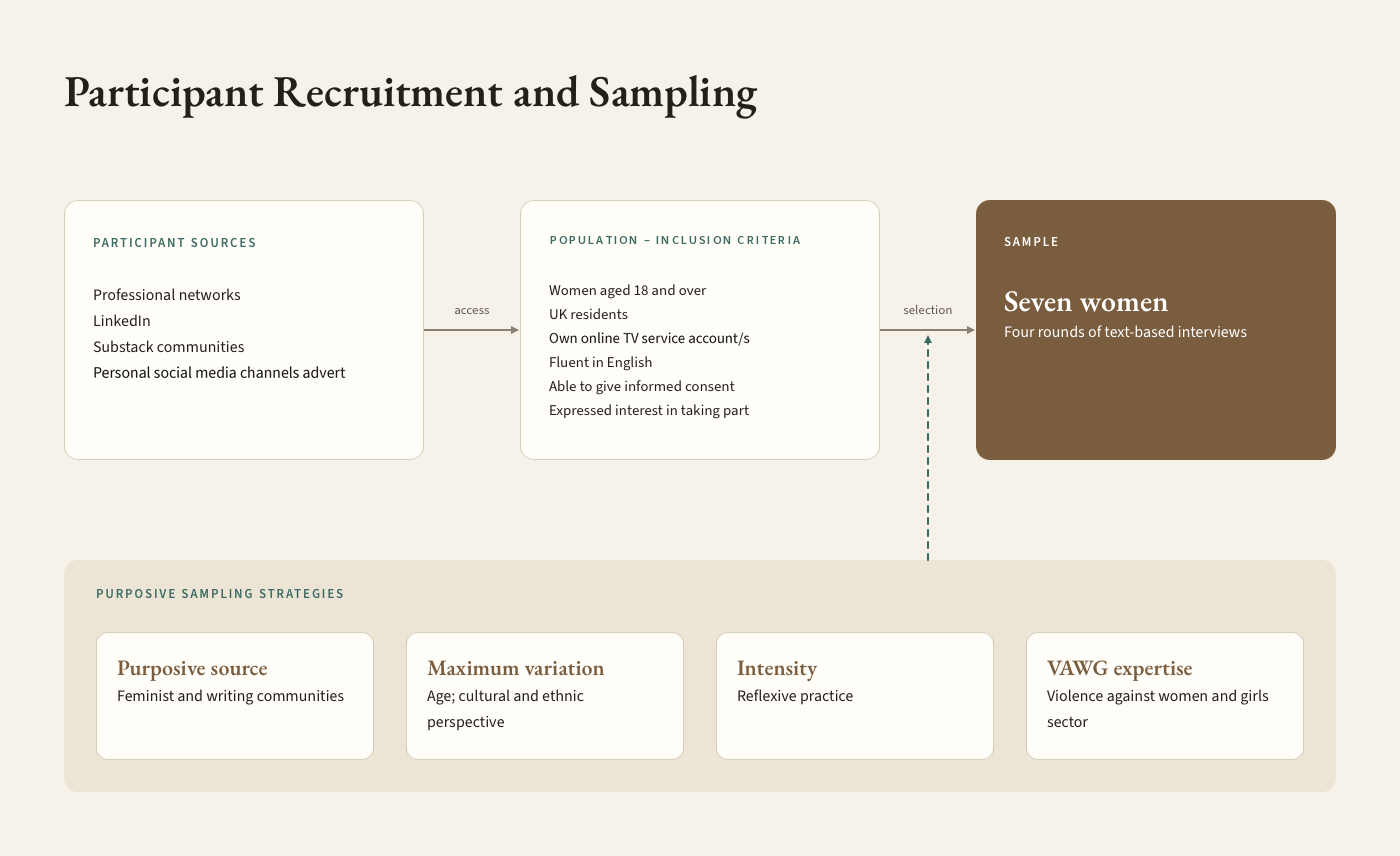
Figure 1. Participant Recruitment and Sampling. Source: author; image Claude Opus 5.5 Medium.
As discussed in the methodology chapter the sampling approach in this hermeneutic phenomenology research project is purposive, given the inquiry is seeking the meaning of the particular experience of algorithmic governance in online TV. As such, participants were selected for their lived experience of this phenomenon to be able to give an account of it (Dibley et al., 2020, p. 54). In this supplementary webpage section, I set out how participants were identified and selected drawing on both hermeneutic phenomenology and qualitative social science vocabulary so that my decisions can be followed in either register.
Following Dibley et al. (2020, p. 53), I distinguish between participant sources, the population, and the sample.
- The participant sources included: my professional networks, including contacts in the therapy profession and in the violence against women and girls (VAWG) sector; LinkedIn; two Substack communities, one feminist and one a writing community with a substantial feminist membership; and my own social media channels.
- The population comprised women aged 18 and over, resident in the UK, who have an online TV service account/s, were fluent in English and able to give informed consent, and who expressed interest in taking part. The sample was selected from this population.
- Within the overall purposive design, selection drew on several strategies from Patton's (2015) typology of purposeful sampling. Criterion sampling governed the inclusion criteria from all sources. The online communities and networks met these requirements, and I placed the calls in them because their members were women accustomed to writing and communicating online, which followed directly from the study's use of text-based interviews conducted through WhatsApp. Three participants were recruited through my professional networks, two from the therapy profession and one from the VAWG sector; two through LinkedIn; and two through the Substack call. Maximum variation sampling guided selections intended to widen the range of age and of cultural and ethnic perspective in the sample. Indeed, Dibley et al. (2020, p. 55) describe purposive sampling with maximum variation as selecting, within the inclusion criteria, to give the sample as diverse a profile as possible. Intensity sampling, the selection of information-rich cases likely to manifest the phenomenon intensely (Patton, 2015), informed the inclusion of participants whose professional practice involves sustained reflexivity and who could be expected to articulate their experience in depth. I also selected participants for their specialist knowledge of the VAWG sector, anticipating that their perspectives would challenge my own pre-understandings of the phenomenon. Indeed, more broadly transformation and challenge were borne out; the accounts of two participants, one with VAWG experience, unsettled and transformed elements of my pre-understanding, as I discuss in the results chapter.
Several participants were known to me through my professional networks before the study began, and two responded to an open call. This raises the question I reflected on: whether the sample is better described as a convenience sample. Dibley et al. (2020, pp. 54–55) note that purposive and convenience sampling can overlap but are not the same: in convenience sampling, the ready availability of participants drives selection, rather than how closely their experience fits the purpose of the study. Here, my networks and the online calls were routes of access, and selection in each case was made against the criteria set out above. The two participants recruited through Substack self-selected, as volunteers in hermeneutic studies typically do (Dibley et al., 2020, p. 65), but they responded to a call placed deliberately where the respondents are comfortable with text-based online communication. I therefore determined to describe the sample as purposive, using criterion, maximum variation and intensity sampling and selection for expert VAWG knowledge, with access through professional networks and targeted calls in women-centred online spaces.
Access through professional networks reflects what Dibley et al. (2020, pp. 52–53) term situatedness. The hermeneutic researcher is usually connected, professionally or personally, to the world under study, and the principal benefit of this connection is access to a study population. In positivist designs such a connection is treated as a source of bias to be controlled; in hermeneutic phenomenology the researcher is part of the design, and the task is to make that relationship visible rather than remove it (Dibley et al., 2020, p. 52). My prior professional connections with some participants are varied and not personal or extended, and I reflected on these connections in my journals and through the transformative challenge described in paradigm case C.
The final sample comprised seven women (two further maximum variation recruits not proceeding beyond initial interest), with all seven taking part in four rounds of text-based interviews, and three contributing to an app diary in-between interviews. An eighth prospective participant was withdrawn due to misalignment with the methodology prior to data collection, and did not proceed to consent. Further, following the third round of interviews purposive sampling for maximum variation was used for a potential additional participant, but the participant did not proceed at that stage. The latter participant has indicated interest in the small group interview and will form part of reflective iterative sampling.
Sample size
Sample size in hermeneutic phenomenology cannot be calculated in advance. It is dependent on the purpose of the research, the rarity of the topic, the depth and completeness of the data, and the method of analysis (Dibley et al., 2020, p. 56). A design in which each participant is interviewed several times produces depth over time and supports a smaller sample (Dibley et al., 2020, pp. 56–60). Benner (1994, p. 107) similarly ties sample size to the text rather than to a number of participants: it is limited by the size of the text generated and the number of researchers available to analyse it, and is often adjusted "depending on the quality of the text and the way the lines of inquiry are reshaped by the participants". Repeated interviews increase the text, and for Benner, "a great deal of the richness and redundancy in the multiple interviews made meanings and coping patterns more visible and increased my confidence about understanding the practical world of the participants". As a sole researcher, the size of text I could read and dwell with at depth formed part of this sufficiency judgement. Malterud et al.'s (2016) concept of information power links this reasoning to the wider qualitative literature: a narrow aim, a highly specific sample, applied theory, strong researcher–participant dialogue and case-oriented analysis each increase the information power of a sample and reduce the number of participants needed. Each of these features characterises the present study. I did not seek data saturation, which Dibley et al. (2020, pp. 61–62) regard as unattainable in hermeneutic phenomenology because something always lies beyond the reach of a study. The guiding question was instead whether enough data had been gathered to address the research question satisfactorily (Dibley et al., 2020, p. 62).
References
Benner, P. (1994). The tradition and skill of interpretive phenomenology in studying health, illness, and caring practices. In P. Benner (Ed.), Interpretive phenomenology: Embodiment, caring, and ethics in health and illness (pp. 99–127). SAGE Publications.
Dibley, L., Dickerson, S., Duffy, M., & Vandermause, R. (2020). Doing hermeneutic phenomenological research: A practical guide. SAGE. https://doi.org/10.4135/9781529799583
Malterud, K., Siersma, V. D., & Guassora, A. D. (2016). Sample size in qualitative interview studies: Guided by information power. Qualitative Health Research, 26(13), 1753–1760. https://doi.org/10.1177/1049732315617444
Patton, M. Q. (2015). Qualitative research and evaluation methods: Integrating theory and practice (4th ed.). SAGE.